Tuesday, August 17, 2010

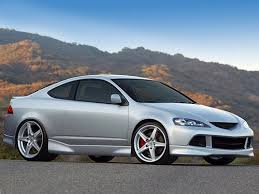
2010 AcuraTSX V6 Wallpaperd

The new V6 engine, which is likely lifted from the North American Accord, puts the TSX within range of the larger TL sedan’s 300 hp 3.7-liter V6. The engine will be coupled to Acura’s Sequential SportShift automatic transmission that includes paddle shifters on the steering wheel.The European Accord and the Acura TSX will come with a 280 hp 3.5-liter V6 (gas powered) for the 2010 model year. Although they are basically the same car, the horsepower is very different on the two sides of the pond. The gap between the European Accord and the Acura TSX is getting wider. use the car insurance, car rentals, car body design and others.
2010 AcuraTSX V6 Wallpaper

2010 AcuraTSX V6 Wallpaper

2010 Acura TL Photos

2010 Acura TL Photo
2010 Acura TL Photo
2010 Acura TL Photo
2010 Acura TL Photo

Acura Cars Wallpapers

Acura car wallpaper
Acura car wallpaper
Acura car wallpaper

Acura car wallpaper

Sunday, August 15, 2010

Upcoming 2011 chevrolet camaro convertible car


2011 Chevrolet Camaro Convertible Front Angle View

Following a lrecent report that GM’s plans for a high-performance Camaro Z28 had been canceled and the Camaro Convertible was on hold, comes a little good news but also some bad. The good news is that the Convertible is back on track for a March 2011 launch, while the bad news – you guessed it – is that the Z28 is looking less and less likely to ever come to fruition

Cost cutting at GM and fears that the German supplier of the Camaro Convertible’s roof mechanism was about to go under led to last week’s claims that the car was put on hold indefinitely. However, the supplier in question is still in business and has a new agreement signed with GM.

Furthermore, GM spokesman Terry Rhadigan has confirmed to Automotive News that production of the highly anticipated drop-top is scheduled to start in the first quarter of 2011. He went on to concede that this will be a few months later than the originally planned late 2010 launch.
“We always thought it would be one year after the coupe,” he said. “Instead we are going two.”

As for the Z28, GM was planning to add the 550hp (410kW) 6.2L V8 engine from the Cadillac CTS-V to the Camaro’s engine bay in an effort to destroy any chances of the Dodge Challenger SRT8 and Shelby Mustang GT claiming the title of ‘modern-day muscle car king’. Sadly, the Z28’s expected $50 million development price tag, impending 35.5mpg CAFE implications, and niche status meant it was virtually dead from the start.


2011 chevrolet camaro convertible

2011 chevrolet camaro convertible

2011 chevrolet cruze upcoming


Chevy is about ready to launch the all new Cruze compact sedan here in North America and company executives have high hopes for this latest model. During a sit-down Q&A with engineering, marketing and product bosses behind the Cruze, Chuck Russell, Vehicle Line Director for Global Compact Cars said the introduction of the Cruze, “might be he most important launch we’ve ever done.”

The numbers seem to support Russell’s statement. As a brand, Chevy sales make up 70 percent of GM’s total sales in the U.S. and the compact car segment just so happens to be the second largest segment in the U.S., making up 15.2 percent of all vehicles sold. That’s just shy of the 16.1 percent first place spot held by mid-size sedans. This also happens to be a segment where Chevy has come up short, with the Cobalt a failed successor to the Cavalier.

With the Cruze, Chevy believes it has the car to get the job done, having already sold 270,000 units globally. But this is not an entirely global car, with new items being introduced in each market, like the new 1.4-liter turbocharged 4-cylinder that is debuting in the U.S.

North American models will also get Chevy’s patented Z-link rear suspension that maintains the benefits of a fixed torsion beam setup (like low cost, light weight and compact size) while delivering a ride that is closer to a fully-independent setup. GM engineers believe they’ve come up with something truly innovative in this suspension setup, even going so far as to call it a “better moustrap.” Not all markets are getting this more advanced rear suspension system, but North America is because Chevy wanted to build a compact car that would be a winner. “Being as good as [the competition] isn’t going to work,” says Russell.

In general Chevy said it concentrated on five major areas in developing the Cruze, ensuring its compact but with an upscale presence, has leading fuel economy class-leading safety and content, excellent handling and a refined ride, and finally durability and top-notch build quality.

For the doubters, Global Small Car Marketing Director Margaret Brooks, cites the new Equinox, stating the right product will bring success. Brooks lists off impressive numbers for the Equinox, like a four percent market increase in the compact crossover segment (the nations 3rd largest segment) so far this year, with an average transaction price that is up $3,400. She breaks down where Chevy expects to see Cruze buyers coming from, with a third moving up from smaller or used cars, a third moving over from current GM products and a third moving down from a larger vehicle.

More importantly, however, are two other stats. First, GM expects that up to 50 percent of Cruze buyers will be conquest customers from other brands. Roughly half of all Equinox buyers are coming to Chevy from other brands and Brooks says that the compact crossover is a good bellwether on which to base Cruze data. Second, GM intends to reach new customers with the Cruze, and not in new demographics either. Brooks says that like the Cobalt (and other compact cars for that matter), the key demographics are 20-29 year-olds, as well as empty-nesters, with the 35 to 45 year-old group passing by cars like this for ones with more space, size and utility. Instead, Chevy believes the Cruze will bring it increased market share in new geographic regions.

While Brooks does admit that the Cruze name will mean added marketing for Chevy, competing against legendary sales icons and household names like the Civic and Corolla, she insists a new name was needed for what is essentially the first global Chevy platform.

Along with an expected onslaught of traditional marketing, Russell says Chevy will look to more grassroots methods of communicating the different aspects of the Cruze to customers, knowing that in such a competitive segment they’ll have to bring the Cruze to buyers – likely with competitors in tow to give a car-to-car comparison.

For AutoGuide’s take on the all-new 2011 Chevy Cruze, you’ll have to wait for our First Drive, coming July 31st.

2011 chevrolet cruze

2011 Chevrolet Silverado Upcoming Truck


There's a particularly trite and overused phrase we've heard so often we no longer respond when someone utters it: "You can't judge a book by its cover." And it's baloney, too. War and Peace is a tough read because it has so many damn pages, is old and weighs a lot. Cats for Dummies is something less than high art and will not soon become a major motion picture.

But a lesser-known corollary to this adage actually works: "You can't judge the profound changes in the capability of a heavy-duty pickup truck by the freshness (or lack thereof) of its sheet metal and interior."

Haven't heard that one? Jim Mikulec, GM's lead development engineer on the 2011 Chevrolet Silverado HD and GMC Sierra HD project, puts it another way: "Everything that's changed is under the skin. Everything that's important is under the skin."

Falling Down
Just four years ago, the 2006 Chevrolet Silverado 3500HD dually defeated Ford Super Duty and Dodge Ram HD trucks in our straight-up fight of strength and towing capability. Despite an aging interior, it won largely on the strength of its 6.6-liter Duramax turbodiesel V8 engine and class-exclusive six-speed Allison automatic transmission. In 2007 GM gave its HD pickups a long-overdue body and interior redesign to go with these then-impressive mechanicals, and for the next couple of years the Chevrolet Silverado HD and GMC Sierra HD twins stood atop the pile.

But the competition would not stand for this. Neither would they sit idly by or take it lying down. We're not sure what it looks like when you're not standing, sitting or lying down, but it apparently involves lots of engineers and money.

Dodge engineers countered first by upping the displacement of the Cummins turbodiesel from 5.9 to 6.7 liters in 2007 and replacing the archaic four-speed automatic with a much-needed six-speed a year later. For 2010 they added new sheet metal and a long-overdue crew cab to the lineup, and the Ram HD vaulted to the front

Ford's brainiacs leapfrogged ahead mere months later after introducing a revolutionary 6.7-liter PowerStroke V8 turbodiesel and a brand new six-speed automatic to handle the new mill's 390 horsepower and 735 pound-feet of torque. The 2011 Ford Super Duty got a final cherry on top in the form of significant upgrades to the interior electronics.

In less than a year, the Chevrolet Silverado HD tumbled from first to worst. Enter the 2011 Chevrolet Silverado 3500HD.

Skeletal Reconstruction
Looking at it, the 2011 Chevrolet Silverado HD seems little different from 2010 versions. The bodywork and interior are essentially unchanged because GM focused its engineers and money on the areas where the Silverado HD lagged behind the competition: payload and towing capacity.

But the GM brass didn't want to merely improve their 2011 Chevrolet and GMC HD trucks. They wanted them to have best-in-class towing and hauling performance, or as Chief Project Engineer Mark Cieslak told us, the goal was to "take the segment."

To accomplish this, carryover bodies would sit atop a completely new frame and suspension designed to support class-leading ratings for GVW (gross vehicle weight) and GCW (gross combined weight).

The resulting clean-sheet frame is built from rails that are both taller and wider, and you won't find any open c-sections because this frame is now fully boxed from end to end. The rails themselves feature more gradual bends, and the crossmembers are stouter, more numerous and tend to be welded in place instead of riveted.

It has paid off big-time. The resulting structure is 92 percent stiffer in bending and nothing less than 500 percent stiffer in torsion than the outgoing frame.

Suspension Beef
A frame like this permits the use of a suspension that can handle higher loads and absorb impacts more efficiently, and GM has taken full advantage with clean-sheet designs for both the HD's front and rear suspension.

In front, the 2011 Silverado HD retains its fully independent double-wishbone layout and the built-in ride and steering advantage it provides over the solid-axle competition. But all of the pieces are newly designed and significantly beefier — the single exception being the stabilizer bar's drop link.

The lower control arms are stouter while the upper control arms, now forged from steel instead of stamped, have been moved upwards to a high-mount position. Heftier torsion bar springs, revalved shocks and dual urethane bump stops allow the front gross axle weight rating (GAWR) to increase to 6,000 pounds on 4x4 versions, a move that allows GM to offer the snow-plow prep option on any 2011 Silverado HD or Sierra HD 4x4 model, regardless of engine choice.

The beefiness extends to the braking system, where 14.0-inch cast-iron brake rotors replace the 12.8-inch units used last year. To ensure proper caliper clearance, this move dictates a minimum wheel size of 17 inches instead of 16 inches. Optional 18- and 20-inch wheels are also on the menu.

Back-to-back drives in the Silverado HD against a Ford F-350 on the open road clearly demonstrated the ride comfort of the Silverado's independent front suspension with its relatively low unsprung mass. But that we expected; it was the brakes that gave us a pleasant surprise. Turns out Chevy engineers didn't like last year's long, soggy brake pedal any more than we did, so they made welcome improvements to the pedal ratio and the hydro-boost assist characteristics to improve response.

Payload Payoff
Out back, the leaf springs are now 3 inches wide, up from 2.5 inches before. The projecting forward half of the springs has been shortened to make the leaves asymmetrical front to rear, a move that reduces axle windup at launch. Urethane rear bump stops replace hard rubber ones, and every mounting bolt in sight has been upsized.

The result is a 1,175-pound increase in rear GAWR from 8,200 to 9,375 pounds. This plus the aforementioned front-end improvements allow a hefty 1,600-pound GVWR increase to 13,000 pounds.

The latter now equals the Ford F-350's GVW rating, but Silverado curb weights tend to be lower, leaving a larger surplus for payload. The top payload of the Silverado 3500HD, the so-called "1-ton" truck, is 6,635 pounds, 1,380 pounds more than last year. Ford's F-350 tops out at 6,520 pounds. In all, Chevy has five 3500-series models with payloads topping 6,000 pounds. Ford has one.

It's much the same on the "3/4-ton" side, where the max payload of 4,192 pounds is one of 13 Chevrolet 2500HD configurations that are rated to carry more than 3,100 pounds. Ford's F-250 offers one such rating. (Ouch.)

Weight Underway
That's the payload side, but it takes more than a stout chassis to support increased trailer weight. As good as the 6.6-liter Duramax had been in the old truck, 365 hp and 660 lb-ft of torque wasn't going to cut it against Ford's new 6.7-liter Super Duty turbodiesel.

No worries. Chevrolet powertrain engineers found another 32 horses and 105 lb-ft, allowing the revised Duramax 6.6-liter turbodiesel to best the Ford's output with a class-topping 397 hp and 765 lb-ft of torque.

The 6.6-liter displacement and 16:1 compression ratio are unchanged. The output increases come instead from a new set of 30,000-psi piezo injectors, a selective catalytic reduction (SCR) system and, more to the point, careful tuning of the engine calibration and turbo-boost map to meet new diesel emissions regulations and testing methods.

Like most other modern clean-diesel emissions technologies, the SCR system injects tiny amounts of the increasingly familiar diesel exhaust fluid (DEF) to react in the SCR catalyst, reducing NOx in this case by some 63 percent. The Silverado's new DEF tank holds some 5.3 gallons, enough for 5,000 miles.

A same-sized variable-nozzle turbo is used, but it's been altered to provide a computer-controller engine braking function, not unlike the system that recently appeared on the Ford Super Duty diesel trucks. Chevy's version differs in that it has an on-off switch and utilizes four maps to optimize performance in the four possible combinations of cruise control on-off and tow/haul on-off.

Through it all, GM claims the new Duramax is up to 11 percent more fuel-efficient than last year's model. Heavy-duty pickup trucks aren't subjected to official fuel economy testing, but GM claims a 680-mile highway range on a 36-gallon tank of diesel. That works out to 19 mpg — unofficially, of course.

It all adds up to a significant increase in the 2011 Silverado's GCWR, the limiting factor when it comes to towing capacity. Last's year's GCWR topped out at 23,500 pounds, leaving 16,500 pounds of maximum 5th-wheel towing capacity. This year's GCWR leaps to 29,200 pounds, dragging the maximum tow rating along with it to 21,700 pounds, a convenient 100 pounds more than the Ford F-350 Super Duty.

Trailer in Tow
The proof, of course, is in the towing. We didn't get a chance to drive on our familiar desert test grade, but we were able to make back-to-back comparisons to a similar Ford F-350 diesel with equal 9,000-pound trailers attached.

In short, Ford and Chevy have themselves a horse race, and Chevy seems to have a slight advantage. Both towed the admittedly lightweight trailer up the admittedly short grade in an equally relaxed manner at part-throttle, but the Chevrolet 3500HD got off the line a tad quicker and ultimately produced less diesel rattle on the steeper sections.

But the rolling terrain of western Maryland was good for demonstrating just how superior the downhill grade logic of the six-speed Allison transmission really is, especially with the exhaust brake added into the mix. The Ford Super Duty was good, but the Silverado HD felt better.

But these conditions weren't particularly challenging or definitive. It wasn't hot, the grades weren't steep or long and, most of all, the supplied trailer didn't bring either truck close to its considerable limits. These heavy-duty machines deserve nothing less than a full rematch on home soil. Don't worry. We're already making plans.

Unfinished Business
We recognize that GM made a logical business decision when it focused its attention on the skeleton and guts of the 2011 Chevrolet 2500 and 3500HD trucks. And we don't really have a problem with the old exterior of this new truck. Minor tweaks to the bumper, grille and hood have made a good-looking rig even more handsome.

But the interior, it needs help. The 2010 Ram HD is all-new in this regard, with a very handsome cab adapted from the universally praised Ram 1500's interior. The 2011 Ford Super Duty's cab isn't particularly new, but the basic design is sound and it is aging quite well thanks to the addition of a very clever new instrument panel and the much-praised Sync infotainment system.

By comparison, the Chevy and GMC interiors are built well enough, but there appears to be a lot of wasted space. Also the switchgear is small, particularly on the center stack, with lots of same-sized buttons in close proximity. Tiny air-conditioning icons highlight our growing need for bifocals, and the control switch for that excellent exhaust brake has a status indicator light that's impossible to see in daylight. There's room for improvement here.

But Still...
There is no denying that the 2011 Chevrolet Silverado 3500HD is a great truck. The things that matter most in this segment — engine, chassis, suspension — have been thoroughly upgraded under the skin. It's nothing less than a heart-lung-brain-skeleton transplant, with stitching so expert we can't see the Frankenstein seams.

An LT-grade Chevrolet 3500HD 4x4 dually starts at $42,885. Add the Duramax diesel engine and Allison transmission ($8,395) and the price rises to $50,880, about $500 less than a Ford F-350 XLT dually 4x4 with a V8 diesel and six-speed automatic. Dodge Ram 3500 SLT prices reside in the same ballpark.

For the time being, at least, the 2011 Chevrolet 3500HD can boast the largest towing capacity, the highest payload and the healthiest engine output in the 1-ton segment. But that's sure to change when the competition throws yet more engineers and money at their respective trucks. After all, as another over-used saying goes, "This is war!"

2011 Chevrolet Silverado Upcoming Truck

Saturday, August 14, 2010

2011 Ford F-250, F-350, F-450 Super Duty Review

The 2011 Super Duty is the third version of Ford's heavy-duty pickup truck in the last four years and the second since Ford reworked the truck for the 2008 model year.

Ford's changes are critical to keeping its lock on the heavy-duty segment, where the F-250 three-quarter-ton and F-350 one-ton trucks rule the pack with almost 50 percent market share; the Ford F-450 1.5-ton continues in a segment that it owns but with several major revisions.

Heavy-duty pickups exist to tow and haul the heaviest loads. While the 6.7-liter Power Stroke Diesel will be the power-pulling crown jewel of the 2011 Super Duty lineup, two other gas engines will be available for the F-250 through F-550 pickups and commercial chassis cabs: today's 6.8-liter V-10 Triton and an all-new 6.2-liter V-8, which is also slated for use in the 2010 Ford F-150 SVT Raptor off-road pickup. This is the engine formerly referred to as the Boss V-8 and the Hurricane before that.

The single overhead cam (SOHC) 6.2-liter V-8 features two spark plugs per cylinder and dual equal variable cam timing.

Ford won't say what the final power figures are for its new 2011 engines, though we have heard that the 6.7-liter PSD will make more than 390 horsepower and 720 pounds-feet of torque. The 6.2-liter V-8 is expected to pump out approximately 400 hp and 400 pounds-feet of torque.

For the U.S., the 6.2-liter gas engine will be E85-compatible from Job 1, and the 6.7-liter Power Stroke will be certified to run on biodiesel blends up to B20 (20 percent biodiesel and 80 percent conventional diesel).

The 6.7-liter diesel will meet the California Air Resource Board's tough oil-burning emissions standards that force noncompliant diesel engines to automatically shut down after five minutes of idling if they produce too much nitric-oxide emissions. The F-Series Super Duty trucks will be able to idle indefinitely and still meet CARB's tough NOx emissions limits.

All three engines will be paired with Ford's all-new 6R140 heavy-duty TorqShift six-speed automatic transmission that promises innovative shift strategies and power takeoff features. Ford has badly needed a six-speed automatic transmission for its diesel HD pickups to compete with Dodge's 68RFE and GM's Allison T1000 six-speed automatics. The six-speed also gives Ford gear parity with GM's 6L90 six-speed 6.0-liter V-8 gas engine and an extra cog over Dodge's 545RFE five-speed 5.7-liter Hemi V-8 gas engine.

The new transmission wrings out several inefficiencies versus the 5R110 that help improve fuel economy. They include faster warm-up times and operating the transmission cooling system at 200 degrees Fahrenheit instead of 173 F — a temperature that Ford says strikes a good balance between mileage and trailer-towing shift performance.

The 6R140 also uses a new torque converter lockup strategy that enables the torque converter to lockup sooner and more often, which allows the engine to run at a lower rpm for better fuel economy. A long-travel turbine damper helps the torque converter cope with the 6.7-liter V-8 diesel's high torque output and allows the powertrain to lug down to 900 rpm.

Gas engine models inherit the Super Duty's electronically controlled viscous clutch that debuted on the 2008-10 6.4-liter diesel trucks and delivers better fuel economy and overall NVH and controllability.

The 6R140 doesn't stop with the addition of sixth gear; it adds Ford's "SelectShift" feature that lets the driver lock-out gears and manually shifts and hold gears in a way that's similar to GM's and Dodge's automatic transmissions.

Here's how SelectShift works: On the gear select lever, which is mounted on the truck's steering column, there's a shift-up/shift-down button near the tow/haul button. If you're in Drive and enter SelectShift mode you'll be able to lock out sixth gear. The truck will communicate the subtraction by showing only five gear positions in the instrument cluster display. Doing this turns the six-speed transmission into an electronically limited five-speed. Drivers can also lock out every other gear down to first, though you'd obviously limit the truck's driving performance envelope. An automatic rev limiter ensures the truck won't blow the redline if you shift into this mode while traveling at highway speeds.

Like the horsepower and torque figures, Ford has remained coy about specific changes to Super Duty max towing and payload ratings.

Ford says that, in general, payload capability will improve by about 100 pounds, for two reasons: First, the new 6.7-liter diesel engine weighs about 160 pounds less than the outgoing 6.4-liter diesel. This improves both front payload and the gross axle weight rating, particularly for applications like snow plowing. Secondly, other safety, refinement and emissions-control changes add back about 60 pounds, so the 2011 Super Duty weighs about 100 pounds less than the 2008-10 trucks.

Brand new is the first-ever factory fifth wheel prep package designed and engineered by Reese Hitches. The truck will come with the bed floor cut, the frame mount and the wiring; the customer will still have to buy the hitch that sits in the bed from either a Ford dealer or the aftermarket.

Single rear-wheel Super Duty pickups receive standard trailer-sway control with roll stability control, like the system that's offered on the Ford F-150. TSC measures trailer sway input coming into the truck based on rear yaw motion. If it senses too much, it can apply both the truck's and trailer's brakes (if they're electric) through the integrated trailer brake controller and reduce engine throttle to help prevent loss of trailer control. It's a first for this safety feature in the segment.

The 2011 Super Duty adds an electronic locking rear differential for the first time that's similar to the GKN-supplied e-locker, which is available on the F-150 FX4 off-road package and SVT Raptor.

Brewer said the e-locker has been designed by Ford and will be manufactured at the Sterling Axle plant for single-rear-wheel F-Series Super Duty trucks only.

The locker can be controlled with a dash switch. It's best used in low-friction scenarios, such as on slippery boat ramps or in slick mud and on icy roads. It will stay engaged until the truck reaches 30 mph, at which point it disengages until the truck's speed returns to 30 mph or less. The truck will also disengage the locker if it's making a tight radius turn by sensing the steering wheel position, so the rear wheels and tires aren't damaged from scrubbing on pavement.

The Super Duty borrows seats from the F-150, improving the old six-way power-adjustable chairs to 10-way units with heaters and coolers in the Lariat and King Ranch models. The heated and cooled seats will be available for the Lariat Chassis cab models, too.

There's a new information display in the instrument cluster that can show the truck's attitude off-road as well as the steering position. It also communicates important systems messages and the transmission's gear state.

The Cabela's edition Super Duty that debuted for 2009 goes away for 2011, but Ford is keeping that model's interior storage features. There's lockable underseat storage beneath the small center seat up front and a large storage compartment beneath the rear bench. The extra storage is standard on XLT and Lariat Crew Cab models.